Short answer: DCF sells both SR500 targets and Challenge Targets’ AR500 systems because the right choice depends on the complete product. Material is one part of the decision, alongside thickness, geometry, mounting, ammunition, impact velocity, distance and intended use. There is no single best target steel for every product.
What AR500 means—and where DCF offers it
AR500 refers to abrasion-resistant steel in a nominal 500-hardness class. Published specifications vary by material and thickness: SSAB’s Hardox® 500, for example, is described as nominally 500 HBW. That example is not an identification of Challenge’s steel supplier. For a finished shooting target, use the manufacturer’s actual plate specification and product rating.
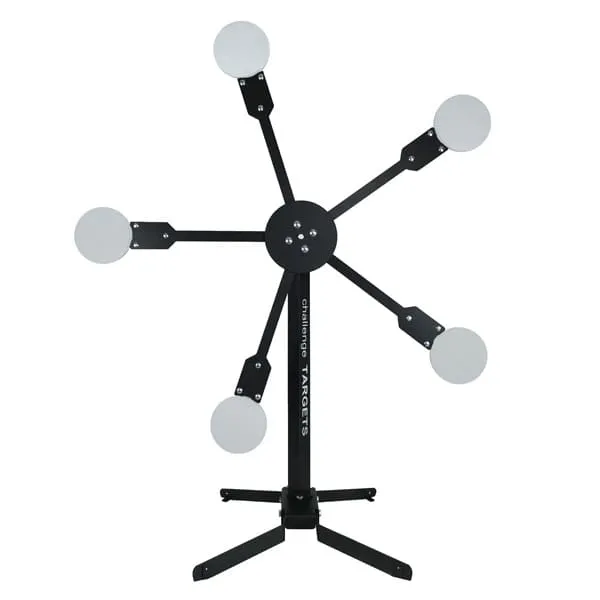
Challenge Targets manufactures the AR500 systems DCF offers, including Texas Stars, plate racks, silhouettes and other reactive targets. These are Challenge products sold through DCF, distinct from our own SR500 line.
What SR500 is—and why DCF uses it
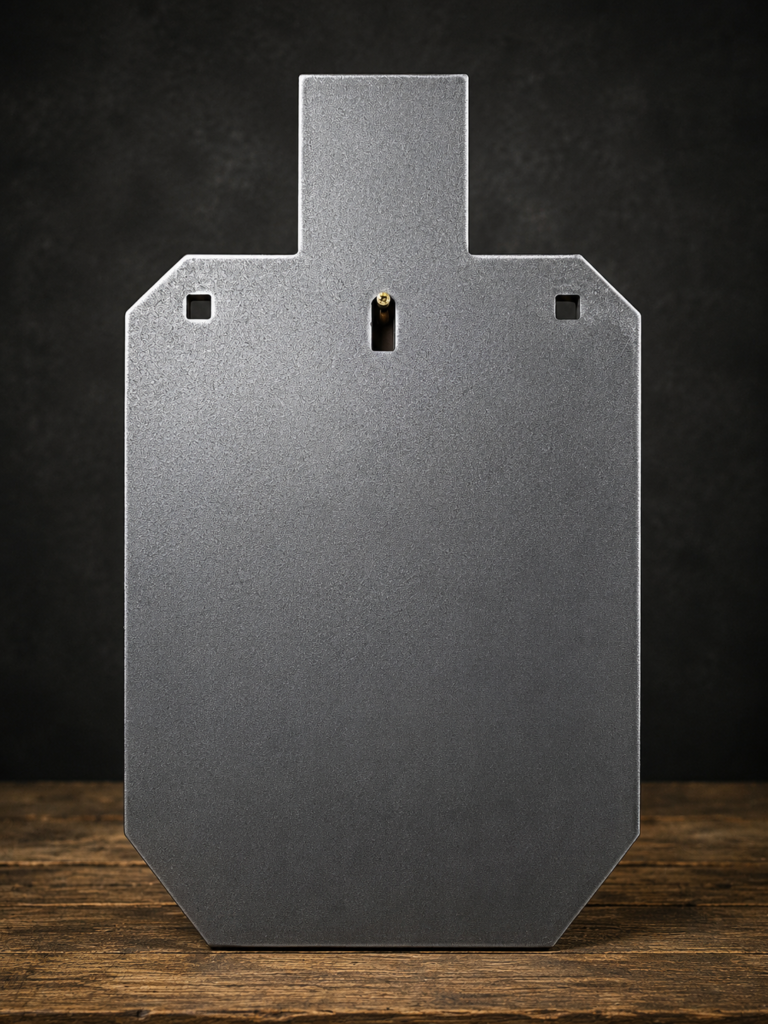
Dead Center Shooting Sports offers its own SR500 targets produced in Kentucky, including standard shapes and custom work. SSAB identifies Ramor® SR500 as ballistic target steel and publishes a 500–590 HBN hardness range. That distinguishes the material’s stated application; it does not prove universal superiority over an AR500 target system or establish a finished DCF model’s firearm rating.
Start with our SR500 target guide and current SR500 products for plates, IPSC shapes and custom fabrication. Review the specific listing’s dimensions and setup before choosing a mount.
Why hardness alone does not choose the target
Compare the entire installation. Two plates with similar nominal hardness can differ in thickness, dimensions, mounting and permitted use. A complete reactive system also has supports, moving parts and replacement components to consider. A steel name does not make another manufacturer’s plate a compatible replacement.
- Thickness and geometry: Check the exact plate dimensions and intended strike surface.
- Mounting: Identify the required stand, base, hardware and assembly instructions, including anything sold separately.
- Ammunition and distance: Use the model’s projectile restrictions, impact limits and minimum distances.
- Use and upkeep: Compare reset method, transport, inspection requirements and replaceable parts.
When a Challenge AR500 system makes sense
Choose by the shooting task. A Texas Star adds changing movement as plates fall. A plate rack offers a bank of plates with a reset mechanism. Compare the exact system’s included components and rating instead of selecting on steel name alone.
Product-specific example: CT-TEXAS-STAR
Challenge’s Commercial Grade Texas Star specifications list five 8-inch, 3/8-inch AR500 plates, handgun/rifle/buckshot use, maximum impact velocity of 3,000 fps and energy of 1,300 ft-lb, and minimum distances of 10 yards for handguns and 100 yards for rifles. These limits belong to that model and must be read with its full instructions.
For a resetting station, compare the Commercial Grade Plate Rack. Check its own current components, reset method and manufacturer instructions; the Texas Star example does not establish a rating for every Challenge product.
When a DCF SR500 target makes sense
Consider DCF’s own targets when you want an individual plate or a fabrication project with particular shapes, dimensions or mounting patterns. Use the SR500 catalog for available standard products. For custom targets or range projects, send your dimensions, quantity, mounting requirements and intended use so the project can be reviewed individually.
Compare value at the system level
For shooters, clubs and range operators, compare what the price includes: plates, stand, mounting hardware, reset equipment and compatible replacement parts. Consider how the system will be transported, assembled and reset. Current product prices and availability appear on the live listings; a lower plate price is not automatically a lower complete-system cost.
Follow the rating for the product you buy
Review our steel target safety guide alongside the manufacturer’s current instructions and your range’s rules. Material specifications, product photos and field tests answer different questions. A field test documents one setup; it does not create a universal ammunition or distance rating.
Shop by application
- DCF SR500 plates and targets — standard products from Dead Center’s own SR500 line.
- Challenge AR500 target systems — search by SKU or browse the current categories for reactive and moving targets, plus silhouette options.
- Texas Stars and plate racks — compare complete moving and resetting systems.
- Custom target projects — dimensions and mounting reviewed for your application.
Need help choosing?
Contact Dead Center Shooting Sports with the model or SKU, intended ammunition, distance, quantity and mounting setup. Dead Center’s own SR500 products are produced in Kentucky; Challenge manufactures and ships its partner products. DCF remains your point of contact for purchases through our store.
Regular catalog orders, including orders over $3,000, can use normal online checkout. Planning a bulk order over $3,000? Contact us before ordering for possible volume pricing and to confirm the best shipping option for your order. Custom projects are quoted individually.


